- 0
- 1,537 word
Cannabis concentrates come in many forms, each offering a different appearance, texture, and composition. Among the more distinctive options are weed caviar and moon rocks. Both are known for their concentrated nature, resin-coated appearance, and association with high-potency cannabis products. However, despite their similarities, they can differ in how they are made, the materials used, and their overall characteristics.
Understanding the differences between weed caviar and moon rocks can help readers learn more about these cannabis products and the terminology used to describe them. In this guide, we will explore their definitions, composition, appearance, potency, texture, and key differences.
What Is Weed Caviar?
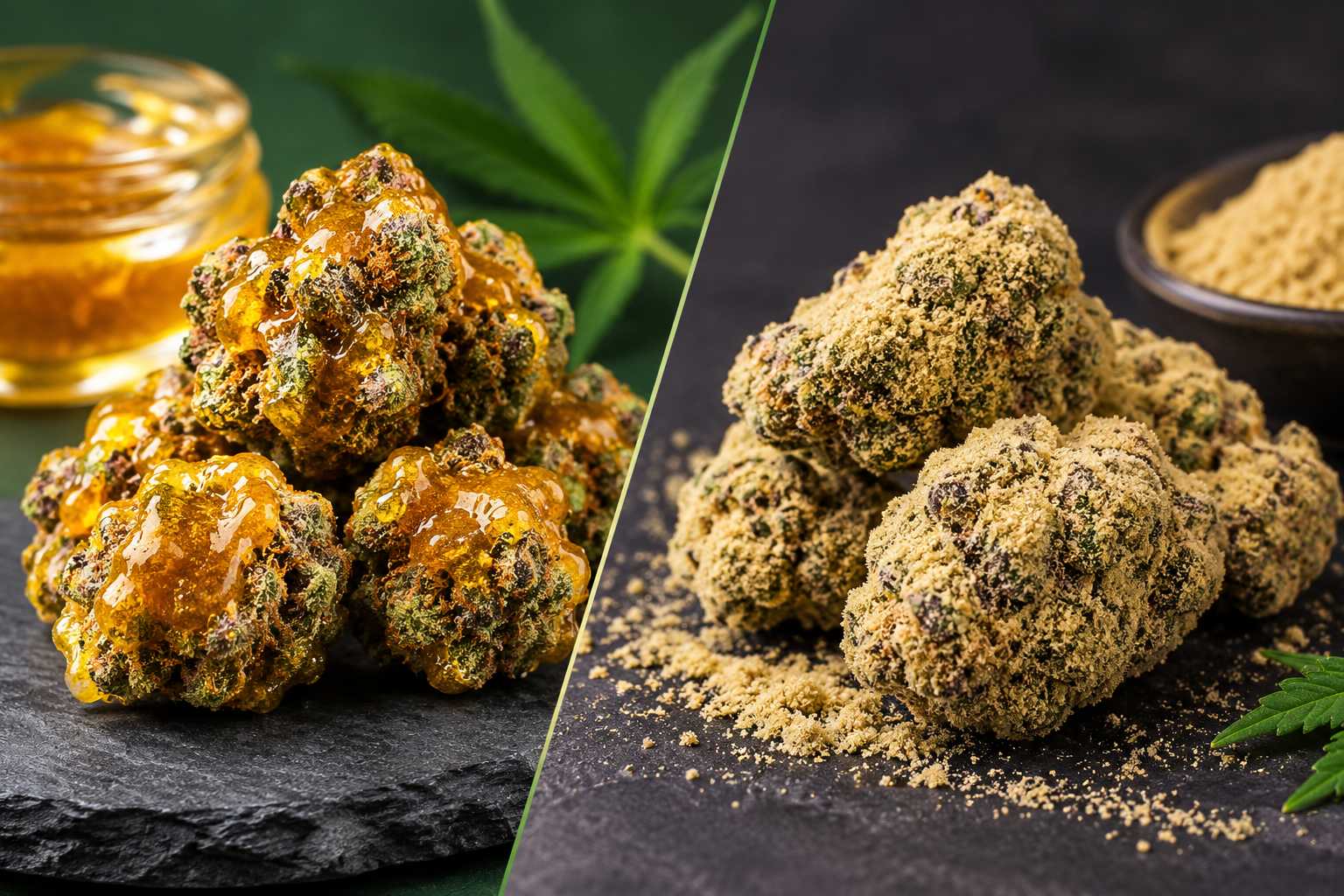
Weed caviar, also called cannabis caviar, is a cannabis product typically made by combining cannabis flower with a concentrated cannabis extract. The flower is coated with cannabis oil or another concentrate, creating a sticky, resin-rich product with a distinctive appearance.
The term caviar is often used to describe cannabis buds that have been enriched with concentrated extracts. Depending on the producer, the final product may feature a glossy surface, a dense coating, and a rich aroma influenced by the original flower and the extract used.
Weed caviar can vary considerably in composition. Some varieties are coated with cannabis oil, while others may incorporate different concentrates or additional layers of cannabis-derived material. These variations affect the product’s consistency, appearance, and cannabinoid content.
One of the defining characteristics of weed caviar is its concentrate-rich composition. Since cannabis extracts can contain high levels of cannabinoids, the finished product may be substantially more potent than ordinary cannabis flower. However, its actual strength depends on the ingredients, manufacturing process, and laboratory-tested cannabinoid levels.
What Are Moon Rocks?
Moon rocks are cannabis buds coated with cannabis concentrate and then covered in kief, which consists primarily of the resinous trichomes collected from cannabis flowers.
The process generally involves three components:
-
Cannabis flower: The central bud that forms the foundation of the product.
-
Cannabis concentrate: An extract that coats the flower and creates a sticky surface.
-
Kief: A powdery material containing cannabis trichomes that adheres to the concentrate coating.
This combination gives moon rocks their characteristic layered appearance. The outer kief coating often makes the buds look dusty, crystalline, or almost covered in a layer of frost.
Moon rocks are commonly associated with high cannabinoid concentrations because they combine flower, concentrate, and kief in one product. Nevertheless, their potency varies depending on the ingredients and production methods.
Their layered structure also distinguishes them from conventional cannabis buds. Instead of having only the natural trichomes found on flower, moon rocks feature an additional concentrate coating and an outer layer of collected trichomes.
Weed Caviar vs. Moon Rocks: Key Differences
Although the terms are sometimes used interchangeably, weed caviar and moon rocks are not always identical. Their precise definitions can vary between producers and markets.
Here are the main differences.
1. Composition and Ingredients
The most important difference is how the products are defined and which ingredients they contain.
Weed caviar generally refers to cannabis flower enriched with a concentrate, such as cannabis oil. Some varieties may include additional ingredients or coatings, depending on the producer.
Moon rocks have a more recognizable three-part structure: cannabis flower, a concentrate coating, and an outer layer of kief.
In simple terms, moon rocks are typically identified by their kief-covered exterior, while weed caviar is a broader term for concentrate-enriched cannabis flower. Certain products may fit both descriptions.
2. Appearance
Appearance is another useful way to distinguish the two products.
Weed caviar often has a glossy, sticky, or resin-coated surface. Its color may range from green and golden to darker amber tones, depending on the flower and extract used.
Moon rocks generally have a more textured exterior because of the kief coating. Their surface can appear powdery, grainy, or frosted, creating a noticeable contrast with the sticky concentrate underneath.
However, appearance alone cannot reliably establish a product’s ingredients, cannabinoid concentration, or authenticity.
3. Texture and Consistency
Weed caviar often has a sticky consistency because of the cannabis concentrate used in its preparation. Depending on the extract, the surface may feel oily, tacky, or resinous.
Moon rocks can also be sticky beneath their outer coating, but the kief gives them a drier and more textured exterior. Their consistency depends on the type of concentrate, the amount of kief, and the moisture content of the flower.
Both products can be delicate and may lose their characteristic structure if handled excessively or stored improperly.
4. Potency and Cannabinoid Content
Potency is one of the reasons both weed caviar and moon rocks attract attention among cannabis consumers.
Regular cannabis flower contains cannabinoids, including THC and CBD, in concentrations that vary by strain and cultivation conditions. Concentrates can contain higher cannabinoid concentrations than flower, while kief contains resinous trichomes rich in cannabinoids and terpenes.
Because weed caviar incorporates concentrates, it may have a higher THC concentration than ordinary flower. Moon rocks combine flower, concentrate, and kief, which can also result in high THC levels.
Neither product is automatically more potent than the other. The final cannabinoid concentration depends on the specific ingredients, their proportions, and the manufacturing process. A reliable comparison requires laboratory testing rather than appearance or product names alone.
High-THC products can produce stronger impairment and increase the likelihood of unwanted effects, including anxiety, dizziness, confusion, and a rapid heartbeat.
5. Aroma and Terpene Profile
The aroma of weed caviar and moon rocks depends on the cannabis flower, the concentrate, and the preservation of their terpene profiles.
Weed caviar may retain the natural aroma of its base flower while gaining additional characteristics from the extract. Depending on the ingredients, the resulting scent may be earthy, citrusy, pine-like, fruity, or pungent.
Moon rocks can have a similarly complex aroma because they combine several cannabis-derived components. The kief coating may contribute additional aromatic characteristics, although the final profile depends on the materials used.
Storage conditions, processing methods, and terpene degradation can influence how much aroma remains over time.
6. Production Methods
Both products involve combining cannabis flower with a concentrate, but their defining features differ.
Weed caviar is generally associated with concentrate-coated flower. The exact preparation can vary, and the term may describe several related product styles.
Moon rocks are typically distinguished by the addition of an outer kief layer after the flower has been coated with concentrate.
These descriptions explain the products at a general level rather than providing manufacturing instructions. The use of concentrated cannabis extracts can involve significant potency and handling considerations, so product composition and safety should not be assumed from a label alone.
Are Weed Caviar and Moon Rocks the Same Thing?
Not necessarily. The distinction largely comes down to terminology and composition.
Weed caviar is a broader label for cannabis flower combined with concentrated extracts. Moon rocks generally refer to flower coated in concentrate and covered with kief.
Because some weed caviar products may also contain kief, the two categories can overlap. A product marketed as cannabis caviar by one seller might resemble moon rocks sold by another.
For this reason, it is helpful to review product descriptions, ingredient information, and independent laboratory results instead of relying exclusively on marketing terminology.
Which Is Stronger: Weed Caviar or Moon Rocks?
There is no universal answer. Both products can contain substantially more THC than standard cannabis flower, but their relative potency depends on their composition.
A concentrate with a high THC percentage may increase the potency of either product. The amount and type of kief, the cannabinoid content of the original flower, and the proportions of each ingredient also influence the final result.
A product’s appearance cannot accurately indicate its THC percentage. Where legal and available, laboratory-tested cannabinoid information offers a more dependable basis for comparison.
People should be particularly cautious with high-potency cannabis products because their effects can be intense and unpredictable. Avoid combining cannabis with alcohol or other intoxicating substances, and do not drive or operate machinery while impaired.
How Should Weed Caviar and Moon Rocks Be Stored?
Proper storage can help preserve the quality of cannabis products by limiting exposure to air, light, heat, and moisture.
For either product, general storage considerations include:
-
Keeping products in an appropriate, sealed container.
-
Storing them in a cool, dark place away from direct sunlight.
-
Avoiding excessive heat, which can affect consistency and aromatic compounds.
-
Preventing moisture buildup, which can encourage mould growth.
-
Keeping all cannabis products securely away from children and pets.
Follow the manufacturer’s storage guidance, and do not consume products that show signs of mould, contamination, or an unusual change in condition.
Conclusion
Weed caviar and moon rocks share several characteristics, including their use of cannabis flower and concentrated extracts. However, their defining difference lies in their composition: weed caviar generally describes concentrate-enriched cannabis flower, while moon rocks typically feature an additional outer layer of kief.
Both products can vary in appearance, aroma, texture, and potency. Neither is consistently stronger than the other, and their names alone do not reveal their precise cannabinoid content.
Understanding these distinctions helps clarify common cannabis terminology and highlights the importance of checking product ingredients and laboratory-tested potency. Since both can contain high levels of THC, consumers should approach them cautiously and be aware of the potential risks associated with highly concentrated cannabis products.
Author

admin@theperiodictimes.online
Related Posts
What Factors Influence Shatter Prices in Canada?
- 0
- 611 words
Shatter is a cannabis concentrate known for its glass-like appearance, brittle texture, and concentrated cannabinoid content. In Canada, its retail price can...
Read out all
Top 10 Popular Indica Strains Every Cannabis Enthusiast Should Know
- 0
- 690 words
Indica cannabis strains are widely recognised for their earthy aromas, distinctive flavours, and traditionally relaxing effects. Whether you are a beginner exploring...
Read out all
How to Choose a Cannabis Vape Pen for Your Needs
- 0
- 1,060 word
Cannabis vape pens have become a popular option for adults who prefer a convenient and discreet way to consume cannabis. With different...
Read out all
Types of Cannabis Kief Available Online in Canada
- 0
- 517 words
Cannabis kief is one of the simplest forms of cannabis concentrate. It consists primarily of the resin-rich trichomes that naturally grow on...
Read out allBuy Cheap Hash Online: What to Look for Before Ordering
- 0
- 493 words
When exploring cannabis concentrates such as hash, consumers often look for products that offer a balance between affordability and quality. However, price...
Read out allHow Does Red Congolese Strain Compare With Other Sativa Strains?
- 0
- 540 words
Sativa strains are often appreciated for their uplifting character, distinctive aromas, and ability to provide an enjoyable experience during daytime or social...
Read out all